10 Best Photography Spots in Lucknow
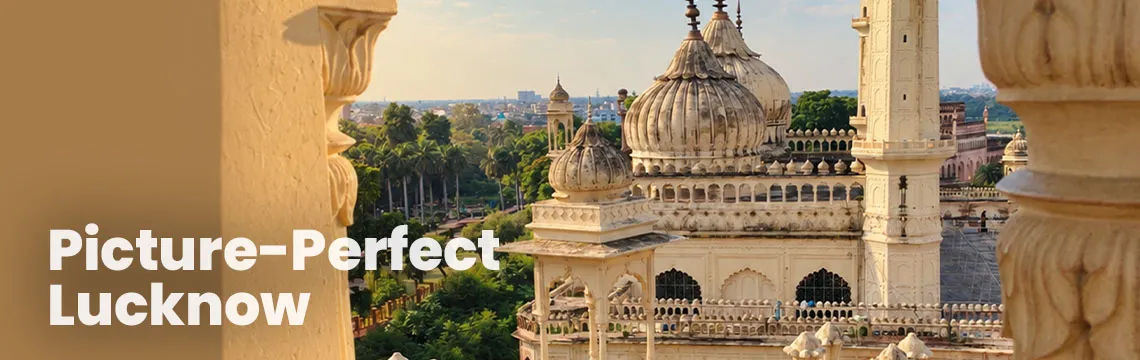
Lucknow is a city that photographs well without trying too hard. Its charm is not limited to one grand monument or one famous street. The city gives photographers a bit of everything: old gateways, quiet courtyards, textured walls, domes, street food stalls, riverfront stretches, markets, colonial ruins, soft evening light and the kind of everyday street scenes that make a travel album feel real.
For travellers who enjoy photography, Lucknow is especially rewarding because the city has layers. A morning can begin with the symmetry of Bara Imambara, drift into the worn arches of The Residency, move through the bustle of Hazratganj, and end near the Gomti River as the light softens. Nothing feels too staged. The beauty is often in the contrast: a historic façade beside traffic, a quiet garden behind a busy road, a delicate chikankari shop window after a monument-heavy morning.
For anyone browsing flight tickets for a photo-led break, Lucknow makes sense as a short city escape. Travellers from western India often look at Mumbai to Lucknow flights, while those travelling from the south may prefer a Bengaluru to Lucknow flight. Once the journey is sorted, the city itself does most of the visual work.
Why Lucknow is a strong destination for photography
Some cities are beautiful because they are polished. Lucknow is beautiful because it carries time well. The older parts of the city still hold architectural details that reward slow looking: carved archways, weathered surfaces, narrow passages, mosque domes, old gates, colonial remains and markets that still feel lived-in.
Lucknow also has unusually good variety for photographers. Architecture lovers will find plenty to frame. Street photographers can spend hours in markets and food lanes. Portrait photographers will find warm backdrops in heritage sites, parks and old neighbourhoods. Food photographers can build an entire visual story around kebabs, bread, sweets, chai and shop counters. Even casual phone photographers will come away with images that feel distinctive.
The trick is to avoid rushing. Lucknow is better when explored in soft pockets of time. Early morning is good for monuments and cleaner frames. Late afternoon is better for golden tones. Evenings work well for markets, food lanes and lit-up buildings, though low-light photography needs a steady hand or a good phone night mode.
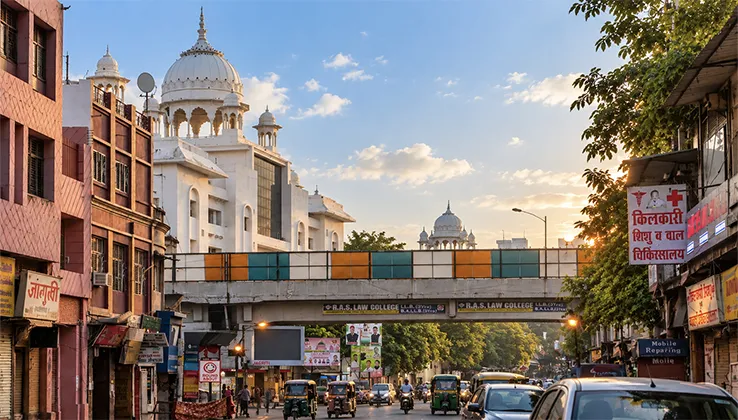
1. Bara Imambara
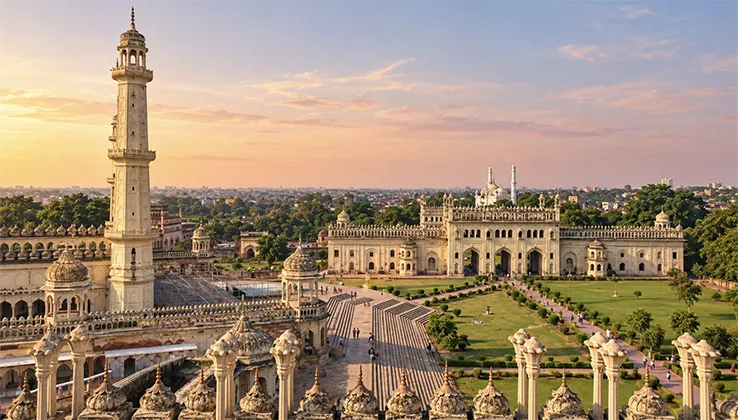
Bara Imambara is usually the first name on any Lucknow photography list, and for good reason. It gives a photographer scale, symmetry and atmosphere in one place. The long approach, arched entrances, open courtyards and grand architectural proportions make it one of the most photogenic landmarks in the city.
Start wide. The exterior works beautifully in horizontal frames, especially if the sky is clear or lightly clouded. Stand back enough to capture the structure with some foreground, whether that is a pathway, lawn or people moving through the space. Including a few visitors in the frame can help show scale, especially because the building’s proportions are large.
Inside and around the complex, textures become more interesting. Doorways, corridors and shaded sections can create strong light-and-shadow compositions. The Bhool Bhulaiya is especially compelling, but it is not the place to wander casually for photographs without guidance. Move with an authorised guide, stay aware of the route, and use the maze’s narrow passages to capture depth rather than trying to shoot everything at once. A practical photography note: the best images here often come from patience. Wait a few seconds for a cleaner frame. Let people pass through arches. Watch how light falls across the structure. Bara Imambara is grand, but the stronger shots often come from smaller decisions.
2. Rumi Darwaza
Rumi Darwaza is one of Lucknow’s most recognisable frames. It has that rare quality of being both a monument and a city landmark that still sits in the flow of everyday movement. That can be frustrating for photographers who want an empty frame, but it is also what makes the place visually alive. The gateway looks good from multiple angles. A straight-on shot works if traffic and crowds allow, but angled compositions often feel more natural. Try using the road as a leading line or wait for a moment when movement in the foreground adds rhythm rather than clutter. Early morning is usually kinder for cleaner compositions, while evening can add drama if the lighting is favourable.
Rumi Darwaza is also useful for vertical photography. The height and ornamental details make it ideal for portrait-oriented frames, especially for social media formats. If you enjoy architectural detail, zoom in on the upper sections, arches and curves rather than only taking the obvious full-gate image. This is also a good place to practise patience with imperfect city scenes. A scooter, a pedestrian, a street vendor or a passing vehicle may actually make the image more Lucknow than a completely empty frame would.
3. Husainabad Clock Tower
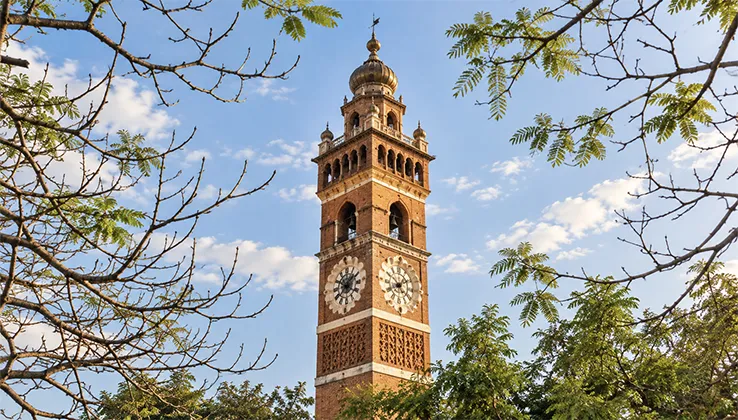
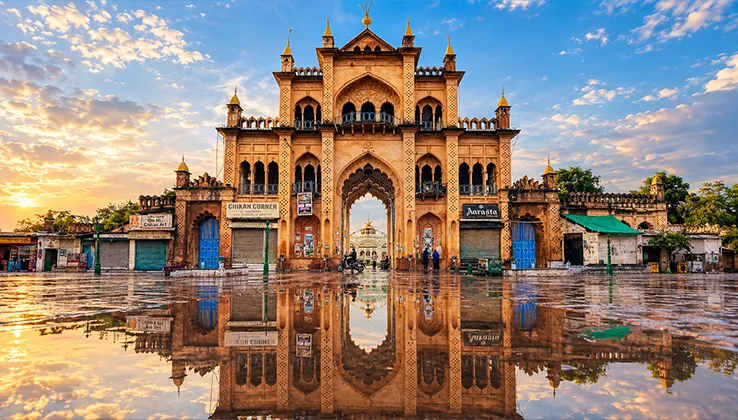
The Husainabad Clock Tower is excellent for photographers who like vertical lines and old-world city architecture. The tall structure creates a strong focal point, and the surrounding area offers enough context to make the frame feel complete. A vertical composition is the obvious choice, but do not stop there. Try stepping back and including nearby pathways, railings or surrounding buildings. If the sky is dramatic, let it take up more room. If the sky is flat, focus on the tower’s details and shape.
The area around the clock tower can also pair well with nearby heritage spots, making it easy to build a walking photography route. It works nicely as a transition point between monument photography and street photography. For cleaner frames, early morning is useful. For atmosphere, late afternoon and evening can add warmth. The tower has a different personality depending on time of day, so photographers with flexibility may want to return twice.
4. Gomti Riverfront
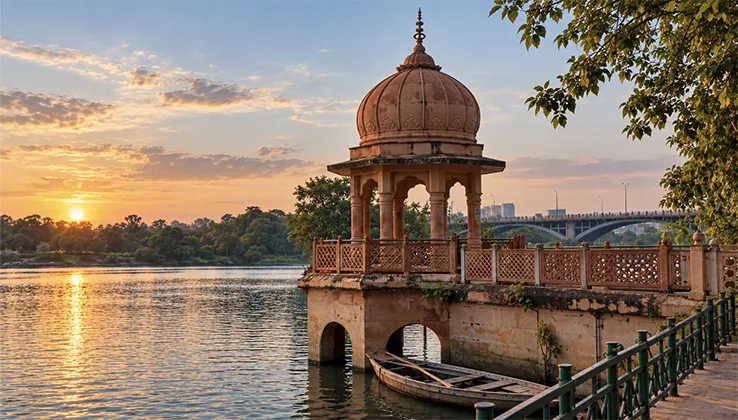
After a day of monuments, the Gomti Riverfront gives Lucknow a more open, contemporary frame. It is ideal for wide compositions, walking shots, sunset colours, reflections and relaxed portraits. The riverfront also works well for travellers who want photographs that are not only heritage-focused.
Evening is usually the most rewarding time here. The light softens, the water picks up colour, and people begin to gather for walks. Instead of trying to remove people from the frame, use silhouettes or distant figures to create scale. A person walking along the riverfront, a bicycle passing through, or reflections on the water can bring movement into the image. This is also a good place for phone photography. Modern phones handle skies and reflections well, but it helps to avoid over-zooming. Move closer when possible and keep the horizon straight. Small adjustments matter more near water because tilted horizons are very noticeable.
5. La Martiniere College and Dilkusha Kothi
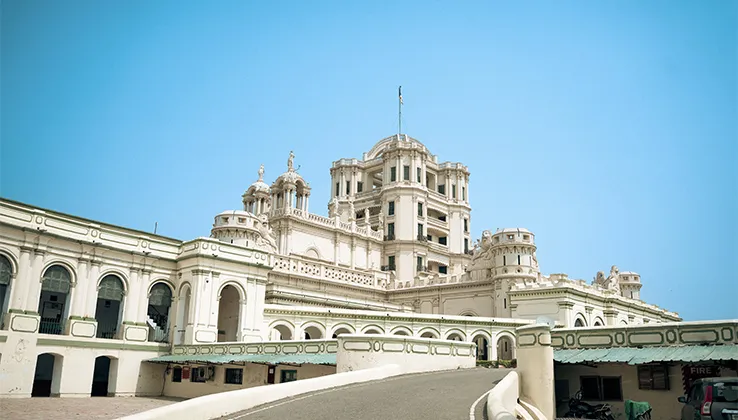
La Martiniere College and Dilkusha Kothi add another visual side to Lucknow. The architecture here feels distinct from the Imambara circuit, with European influences, open grounds and old-world forms that photograph beautifully from a distance. Access and photography rules may vary by area, so the visit needs a bit of common sense and respect for boundaries.
Dilkusha Kothi, with its ruined structure and garden setting, is especially good for soft, atmospheric frames. It does not ask for dramatic editing. The mood is already there. Shoot from a distance first, then move closer for arches, broken lines and textures. These spots are useful for travellers who want a less obvious Lucknow album. They bring in a quieter, more contemplative visual tone.
Beyond the Icons: 5 More Places to Photograph in Lucknow
6. Chhota Imambara
Admire its ornate domes, chandeliers, calligraphy and elegant reflections, especially when viewed across the water. Use low angles for symmetrical exterior shots, while indoors, expose carefully to preserve details in the brighter decorative elements.
7. The Residency
Capture a quieter side of Lucknow through weathered walls, broken arches and atmospheric ruins that work beautifully in monochrome. Morning and late-afternoon light soften the grounds, though strong midday shadows can add drama and depth to textured frames.
8. Hazratganj
Photograph Lucknow’s lively urban character through colonial-style façades, shopfronts, food counters, old signboards and passing crowds. Visit in the evening for glowing storefronts and candid street scenes, keeping compositions observational and respectful rather than intrusive.
9. Chowk and Old Lucknow Lanes
Explore narrow lanes filled with chikankari shops, old balconies, food stalls, brass utensils and colourful street details. Work with the visual bustle by using doorways as frames, focusing on smaller details and carrying minimal equipment through crowded areas.
10. Ambedkar Memorial Park
Use its monumental stone architecture, elephant sculptures, columns and broad plazas to create clean, symmetrical compositions. Late-afternoon light adds warmth to the stone, while the open setting makes it easier to capture uncluttered portraits and wide architectural photographs.
Lucknow’s charm is not only visual. It is in the pace, the food, the politeness in ordinary exchanges, the old shop signs, the smell of kebabs, and the way heritage sits casually inside daily life. The best photographs usually come when the traveller is paying attention, not merely collecting shots.
Carry a wide-angle lens or use your phone’s wide camera for monuments. Keep a standard focal length for markets and food. A small cleaning cloth is useful because dust and fingerprints show up quickly in bright outdoor shots. Comfortable shoes matter more than extra gear, especially around old city lanes and large heritage complexes. For social media, think in both vertical and horizontal frames. Rumi Darwaza, Husainabad Clock Tower and Chhota Imambara work beautifully in vertical composition. Bara Imambara, The Residency and Gomti Riverfront often suit wider frames.
Most importantly, do not spend the entire trip behind the camera.