Witness 4 Popular Festivals Celebrated in Kannur
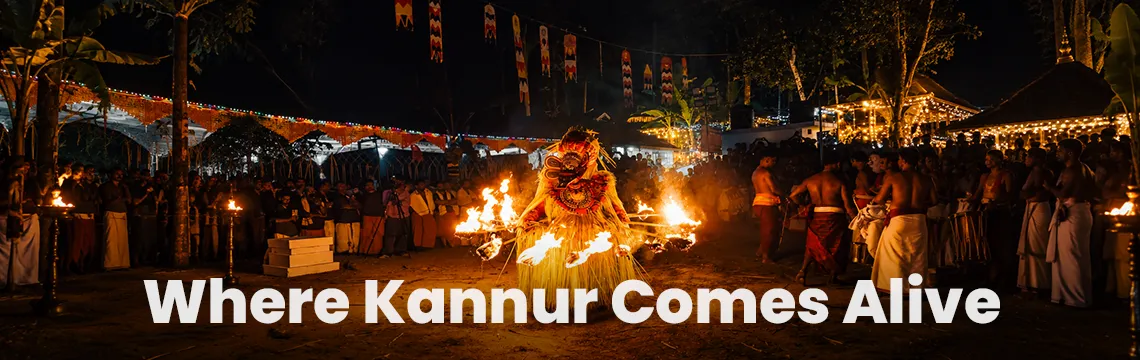
Kannur has a way of making celebrations feel inseparable from the landscape. Sacred groves become performance spaces, riverside temples fill with pilgrims, and quiet villages stay awake through the night as drums announce the arrival of a ritual procession.
Festivals here are rarely staged as spectacles for visitors. They belong to neighbourhoods, temples and local communities, often following customs that have survived for generations. That sense of continuity is what makes attending one feel so memorable.
Four celebrations offer a particularly vivid introduction to Kannur’s cultural character: Theyyam, Kottiyoor Vaishaka Mahotsavam, Puthari Thiruvappana and Onam. Each is quite different in scale and atmosphere, so the experience changes noticeably depending on the season.
1. Theyyam: Kannur’s striking ritual tradition
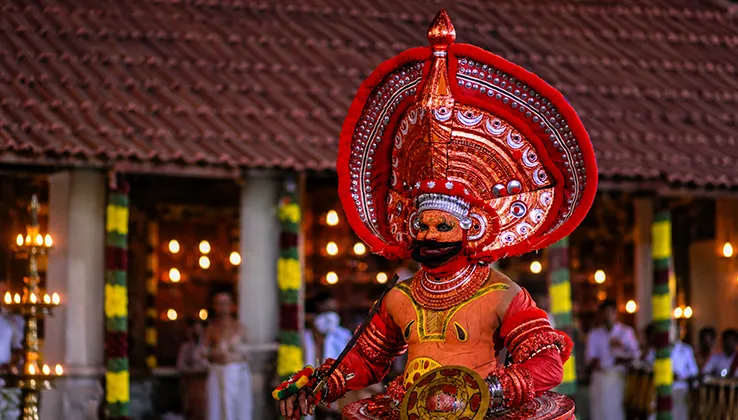
Theyyam is often described as a dance or folk performance, but watching it up close makes that description seem rather limited. It is a living ritual in which elaborate costume, percussion, movement, mythology and worship come together.
Performances generally take place in temples, ancestral homes and sacred groves known locally as kavus. The appearance of each Theyyam varies. Some forms feature towering headgear and intricate red facial patterns, while others use palm-leaf ornaments, painted wooden pieces or flame-lit rituals. Drums build the rhythm slowly, and the transformation of the performer into the ritual character is central to the occasion.
Kannur’s wider Theyyam season usually runs from November to May, although specific dates depend on the Malayalam calendar and the customs of individual places of worship. The district’s official calendars list numerous forms, including Vishnumoorthy, Chamundi, Muthappan, Gulikan and Pottan Theyyam.
Exact schedules can change, making local confirmation useful before travelling to a village venue. There is often no formal auditorium. Visitors may find themselves standing in a temple courtyard before dawn, with oil lamps providing much of the light. Certain performances begin late at night and continue into the morning. The setting can be crowded, warm and noisy, but those elements are part of the experience rather than inconveniences to be edited out.
Modest clothing and patient, unobtrusive behaviour are appreciated. Photography may be permitted at some venues, though sacred moments deserve particular care. A local guide can also help explain the stories, symbols and sequence of rituals without interrupting proceedings.
2. Kottiyoor Vaishaka Mahotsavam: a festival beside the forest
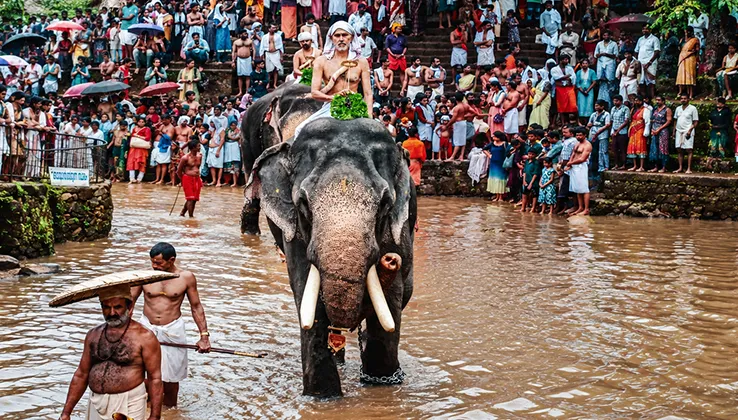
Kottiyoor Vaishaka Mahotsavam feels very different from Kannur’s smaller Theyyam gatherings. This 28-day annual celebration takes place at Akkare Kottiyoor and Ikkare Kottiyoor, two temples positioned on opposite banks of the River Bavali.
Akkare Kottiyoor is particularly unusual. The sacred setting does not have a conventional permanent temple structure, and the principal place of worship centres on a natural stone platform called the manithara. The temple opens during the festival period, which normally falls in May and June.
The walk towards the festival area is part of its character. Forested hills and the sound of the river create a setting that feels removed from a typical urban temple celebration. During busy days, however, the pathways and approach roads can become crowded with pilgrims, vendors and vehicles.
Important observances include Neyyattam, Elaneer Vayppu, Rohini Aaradhana and Elaneerattam. Tender coconuts form a notable part of the offerings, while processions and other ceremonies unfold across the festival calendar. Not every ritual occurs daily, so travellers hoping to witness a particular event should check the year’s programme locally. The festival dates follow the Malayalam calendar and therefore vary. Light, comfortable clothing works well in the humid pre-monsoon season. Footwear usually has to be removed near worship areas, and a small bag is easier to manage than bulky luggage. Rain can arrive unexpectedly around this time, so carrying a compact umbrella is sensible.
3. Onam: celebrations shaped by home and community
Onam is celebrated across Kerala, yet Kannur gives the harvest festival a distinctly northern Malabar character. The occasion usually falls in August or September and unfolds over several days, culminating in Thiruvonam.
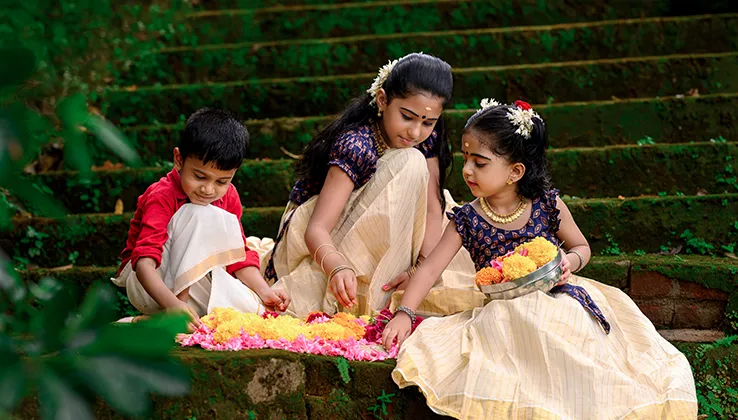
Much of Onam is experienced in homes rather than at a single public venue. Floral arrangements called pookkalams appear at entrances, families wear traditional clothing, and the elaborate vegetarian meal known as Onasadya becomes the centre of the day. Community organisations, schools and local clubs may also arrange cultural programmes, games and floral competitions.
For a traveller, this means the festival can feel quieter than a major temple procession. Streets and markets become busy in the days before Thiruvonam, while the festival day itself may be more family-focused. Restaurants and hotels sometimes offer Onasadya meals, although availability and serving times vary. The season also overlaps with Kerala’s monsoon period. Kannur looks especially lush, but heavy showers may interrupt road journeys or outdoor plans. A flexible itinerary is more useful than trying to fit too many stops into one day.
4. Puthari Thiruvappana: harvest traditions at Parassinikadavu
Held at the Parassinikadavu Sree Muthappan Temple, Puthari Thiruvappana combines harvest customs with the area’s distinctive Muthappan worship.
The temple stands beside the Valapattanam River and follows practices that differ from those seen at many other places of worship in Kerala. Muthappan Theyyam is integral to temple life, while dogs are treated with respect because of their sacred association with the deity. The first portion of prasadam is traditionally served to a dog within the temple complex.
Puthari Thiruvappana takes place on the 16th day of the Malayalam month of Vrischikam, generally around the beginning of December. Freshly harvested rice, or puthari, is offered at the Madappura, and a ceremonial feast is prepared using the new harvest. Muthappan Vellattam and Kalasam Ezhunnallathu are among the rituals associated with the celebration.
The atmosphere is devotional but also communal. The riverbank setting, steady movement of worshippers and presence of Theyyam give the festival a character that is difficult to separate into neat categories of faith, performance and village life.
December weather in Kannur is usually more comfortable than the humid months preceding the monsoon, although daytime warmth remains. Arriving early leaves more time to understand the layout and watch the rituals without pushing through the busiest crowds.
Planning a festival journey to Kannur
Kannur International Airport is the closest airport for many journeys, although flight availability depends on the city of departure and current schedules. Kochi can also serve as a starting point for a longer Kerala itinerary, particularly for travellers combining central and northern parts of the state.
Travellers searching for flights to Kochi can compare suitable travel dates before building an onward rail or road journey to Kannur. Options may include Mumbai to Kochi flights, Bengaluru to Kochi flights and an Ahmedabad to Kochi flight, subject to current availability.
Festival dates can draw larger crowds, so reserving accommodation and flight tickets earlier provides a wider choice. Once the journey is booked, checking the latest flight status helps account for schedule updates.
Eligible passengers can use web check-in from 48 hours until one hour before departure. Some passenger categories and bookings may require airport-counter assistance, so the relevant check-in conditions should also be reviewed.
Kannur’s festivals reward unhurried travel. Leaving room for an early-morning ritual, a sudden spell of rain or a conversation with someone at a village shrine often leads to the moments that remain most clearly in memory.