Kanha National Park: One of India’s Most Beautiful Tiger Reserves
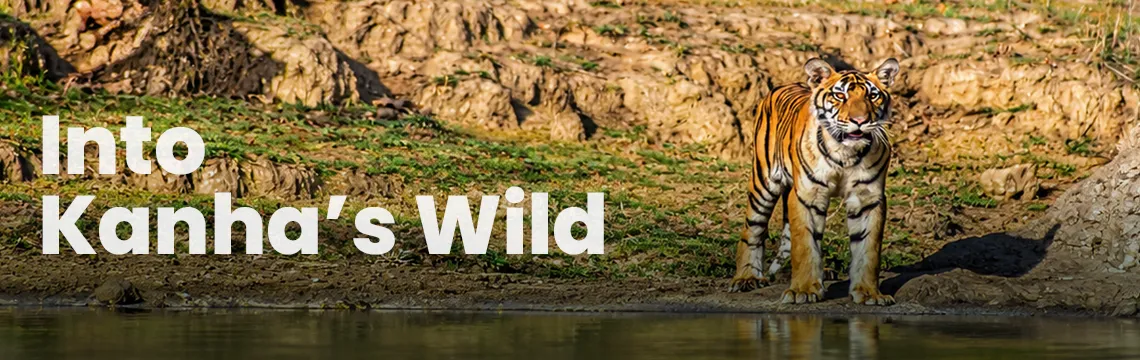
There are some forests that feel loud at first. Cicadas call from the trees, dry leaves crackle under safari tyres, birds send sudden warnings through the canopy, and somewhere beyond the tall grass, something moves without revealing itself. Kanha National Park has that sort of presence. It does not try too hard to impress. It simply lets the forest do the talking.
Set in Madhya Pradesh, Kanha is often spoken about as one of India’s most beautiful tiger reserves, and not only because of the tiger. The landscape is unusually graceful. Sal forests, bamboo patches, open meadows, forest tracks and quiet water bodies come together in a way that feels cinematic without ever feeling staged. Even on a safari where a tiger does not appear, the park has enough texture to stay with a traveller for a long time.
For anyone looking at flight tickets for a wildlife holiday in central India, Kanha makes a strong case for slowing down. The journey usually involves flying into a nearby city and then taking a road transfer into the forest belt. The last few hours on the road are part of the mood shift too, as busy city edges give way to smaller towns, farms, forested sections and the occasional signboard pointing towards Kanha.
Why Kanha National Park Feels So Special
Kanha is not just another forest on a wildlife checklist. The park has a deep conservation story and is especially known for its role in protecting the hard ground Barasingha, a swamp deer species that became closely associated with this landscape. The sight of Barasingha standing in the meadows is one of Kanha’s quieter joys. It is less dramatic than a tiger sighting, perhaps, but just as memorable in its own way.
The tiger, of course, remains the animal most visitors hope to see. Kanha’s forests offer the kind of habitat that makes tiger tracking fascinating. Safari guides listen for alarm calls, read tracks, study movement patterns and make careful choices at junctions. Sometimes the forest feels still for long stretches, and then suddenly a line of spotted deer stiffens, a langur calls from above, and the whole vehicle goes silent.
That silence is one of the best parts of Kanha. It reminds travellers that a safari is not a guaranteed show. It is a patient conversation with a living forest.
Safari Zones and the Rhythm of the Forest
Kanha’s main core zones include Kanha, Kisli, Mukki and Sarhi. Buffer areas such as Khatia, Khapa, Phen and Sijora add more options, depending on the season and availability. Each zone has its own rhythm. Some are known for wide grassy meadows, some for deeper forest stretches, some for the routes that pass through mixed woodland and water bodies.
A first-time visitor does not need to overthink the zone too much, though it is natural to compare. Safari permits, entry gates, accommodation location and travel dates often shape the final choice. More than the zone, the real value lies in doing more than one safari if time allows. One drive gives a glimpse. Two or three drives begin to reveal patterns.
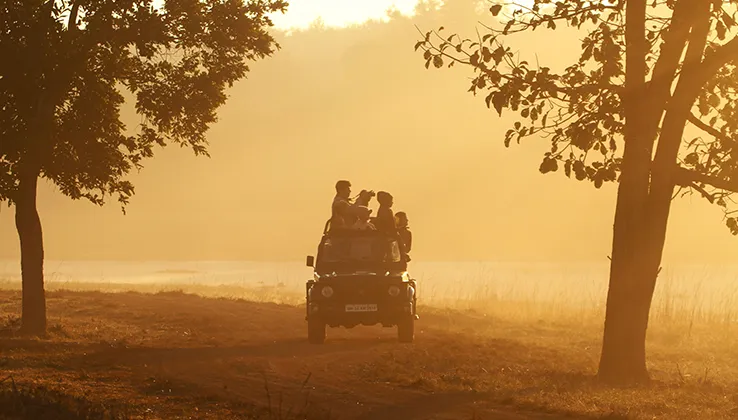
Morning safaris usually start before the day has fully settled. There is a lovely roughness to that hour. People gather with flasks, jackets, camera bags and sleepy anticipation. Afternoon safaris feel different, with warmer light, dustier tracks and a golden end to the day when the forest begins to cool again.
Things to Do in and Around Kanha National Park
Take a jeep safari through the core or buffer zones
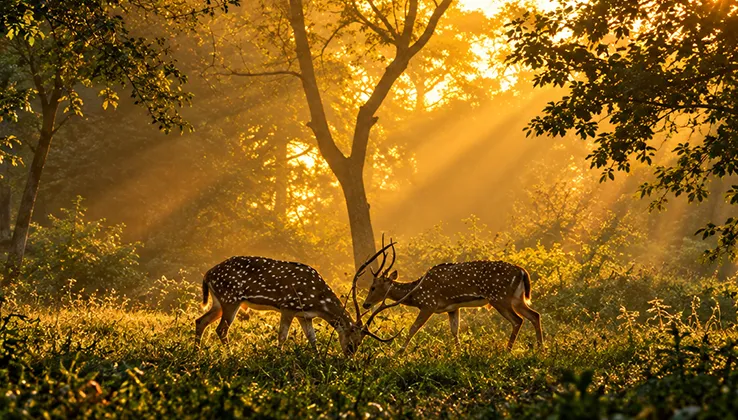
The jeep safari is the heart of a Kanha trip. The vehicle moves slowly through forest tracks, stopping often for sounds, pugmarks, bird activity or a guide’s instinct. It is tempting to spend the whole drive thinking only of tigers, but Kanha rewards a wider eye. A change in bird calls, a herd of chital moving across a meadow, a gaur standing partly hidden in shade, or a Barasingha turning its antlers through morning light can be just as affecting.
The nicest safaris are usually the ones where travellers stay alert without becoming restless. Forest time does not behave like city time. Ten quiet minutes can suddenly become the most exciting part of the morning.
Watch for Barasingha in the meadows
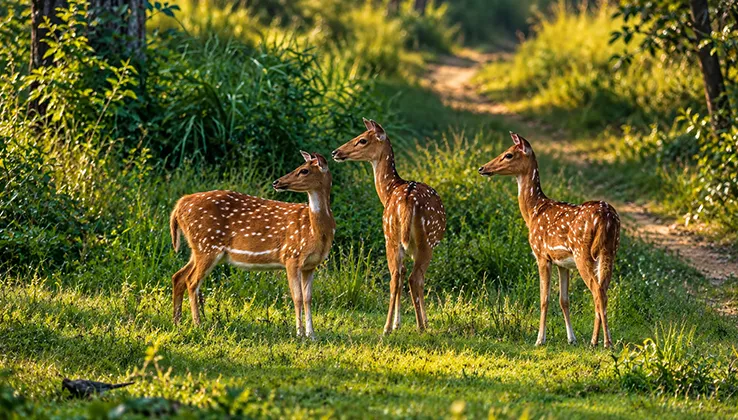
Kanha’s meadows are among its defining features. These grassy openings are wonderful places to watch herbivores, especially Barasingha and spotted deer. In the right light, the meadows look almost painted, with tall grass, scattered trees and pale mist in the colder months. Barasingha sightings are especially meaningful here because the animal is so closely tied to Kanha’s conservation identity.
A good pair of binoculars helps. Even travellers who are not serious wildlife watchers often end up appreciating the slower, smaller details once they start looking carefully.
Spend time birdwatching
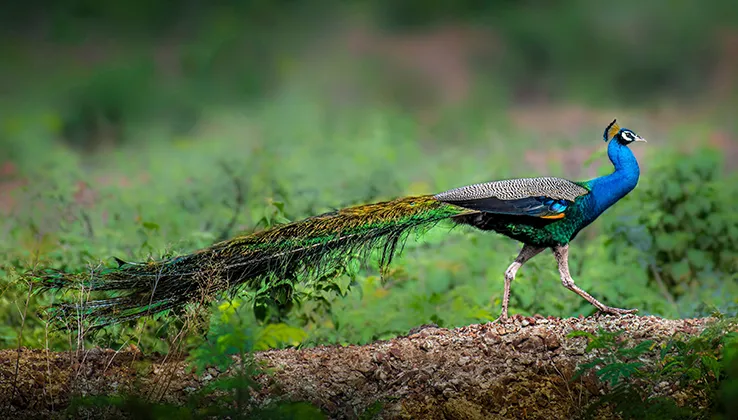
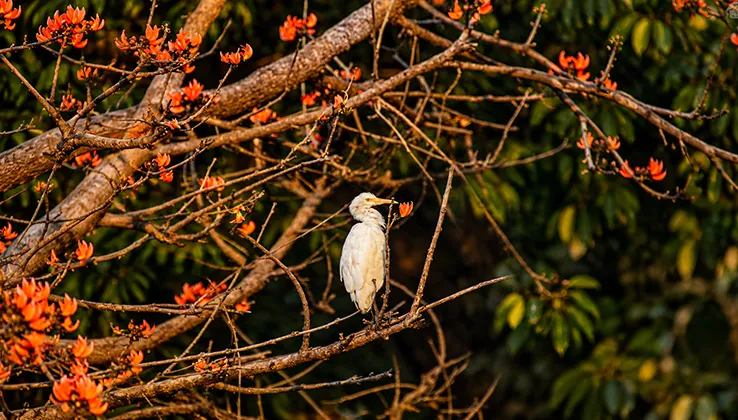
Kanha is also rewarding for birdwatchers. Even casual visitors tend to notice the flash of an Indian roller, the posture of a raptor, the movement of drongos or the calls echoing through the sal. Birdwatching adds another layer to the safari, especially during quieter stretches when larger mammals remain hidden.
The best part is that birding does not demand a separate plan. It happens naturally while waiting near a water body, driving through forest edges or pausing under tall trees.
Visit Bamni Dadar for forest views, where accessible
Bamni Dadar is often associated with beautiful views over Kanha’s forested landscape. Access may depend on current local rules and safari movement permissions, so it should be treated as a possibility rather than a fixed promise. When included in a safari route, high viewpoints bring a different sense of scale. The forest stops feeling like a series of tracks and becomes a vast, breathing landscape.
Explore nearby village life and slower forest stays
A Kanha holiday does not need to be packed from morning to night. In fact, the quieter hours between safaris are part of the charm. Many stays around the entry gates have a relaxed pace. Travellers read, rest, look at butterflies in the garden, talk to naturalists, or walk around safe, permitted areas outside the park with local guidance. Village visits, nature walks in designated areas and conversations with local hosts can make the trip feel less like a quick wildlife chase and more like a proper forest break.
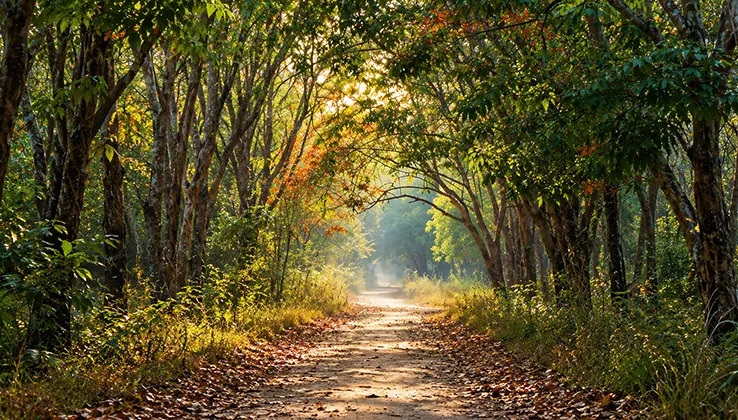
Kanha National Park is beautiful in a way that does not always announce itself immediately. It may be found in a tiger’s brief crossing, yes, but also in a meadow full of Barasingha, in the clean geometry of sal trunks, in the dusty orange light at the end of an afternoon safari, or in the pause that falls over a jeep when the forest suddenly goes alert.
That is why Kanha stays with people. It offers drama, but it also offers restraint. It feels wild, layered and deeply alive. For travellers who enjoy nature with a little patience, and who do not mind letting the forest set the pace, Kanha is one of India’s most rewarding tiger reserves to experience.