Pulikali Tiger Dance: Kerala’s Vibrant Traditional Art Form

During Onam, Kerala is often pictured through flower carpets, graceful dances and long, carefully prepared feasts. Then Pulikali arrives in the streets of Thrissur. Drums quicken, crowds gather and performers painted as tigers begin to prowl, shake and dance around the city centre.
The Pulikali tiger dance is bright, playful and proudly theatrical. Rather than taking place on a conventional stage, its best-known celebration unfolds in public, with Thrissur itself becoming part of the performance. For travellers, it offers a rather different view of Kerala’s cultural life: louder, more spontaneous and closely connected to the communities keeping the tradition alive.
What is the Pulikali tiger dance?
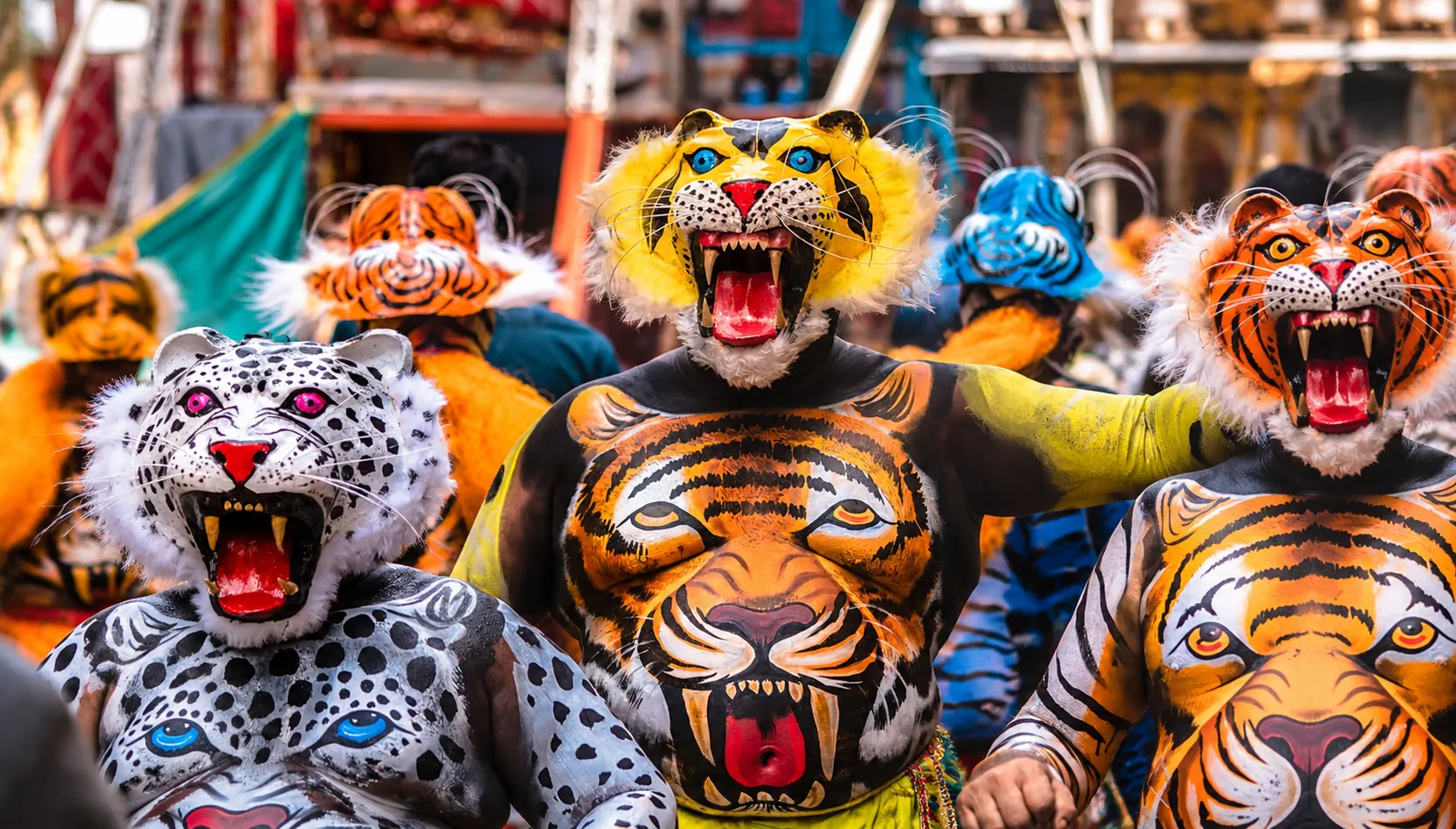
Pulikali is a traditional folk performance associated with Kerala’s Onam celebrations. Its name combines the Malayalam words puli, meaning tiger, and kali, meaning play or performance. Performers paint their bodies to resemble tigers, leopards and other big cats, then dance to the forceful rhythms of traditional percussion.
The most celebrated Pulikali tiger dance in Kerala takes place in Thrissur, particularly around Swaraj Round. The performance is traditionally associated with the fourth day of Onam, although festival dates and local arrangements can vary according to the Malayalam calendar.
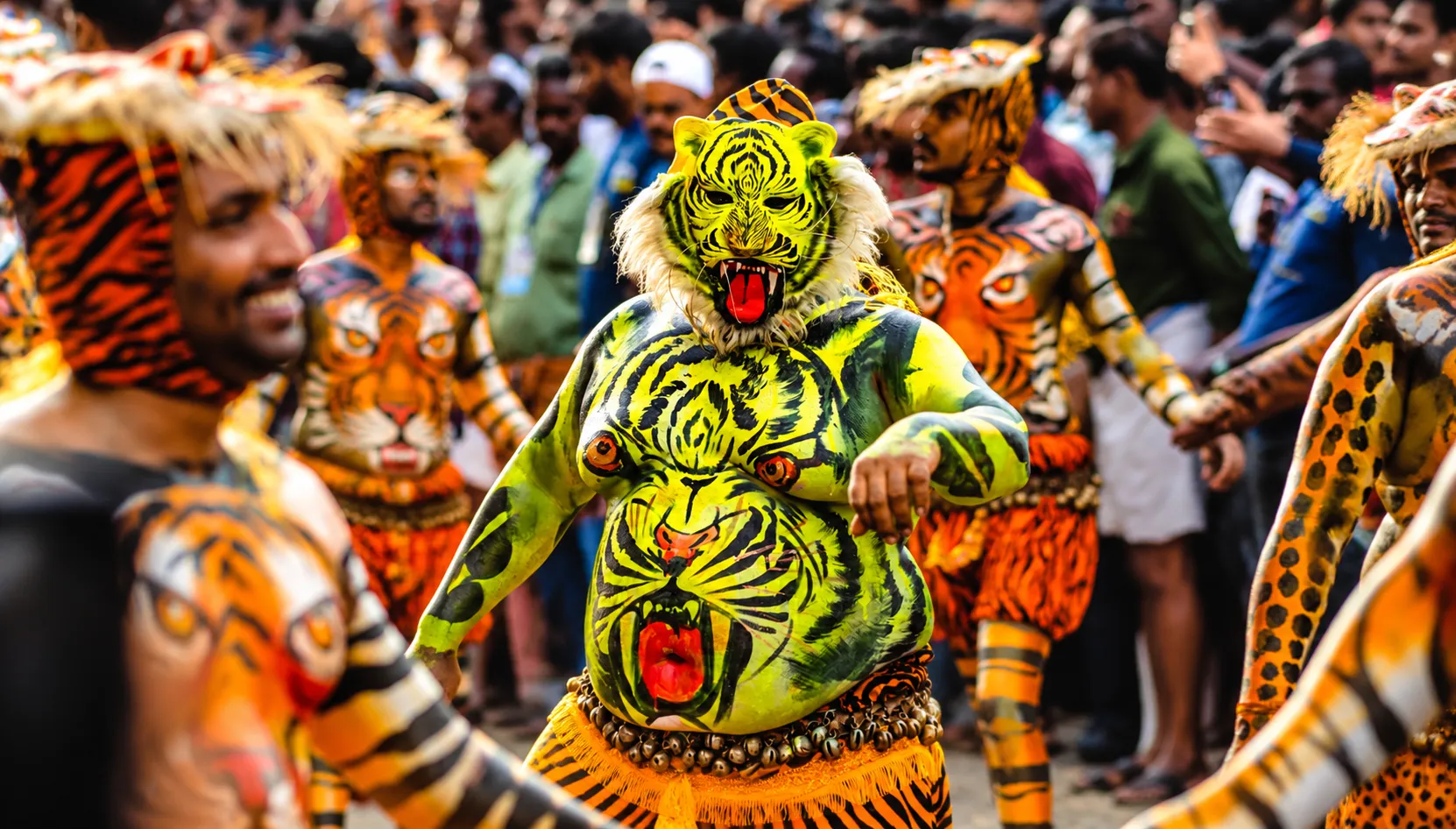
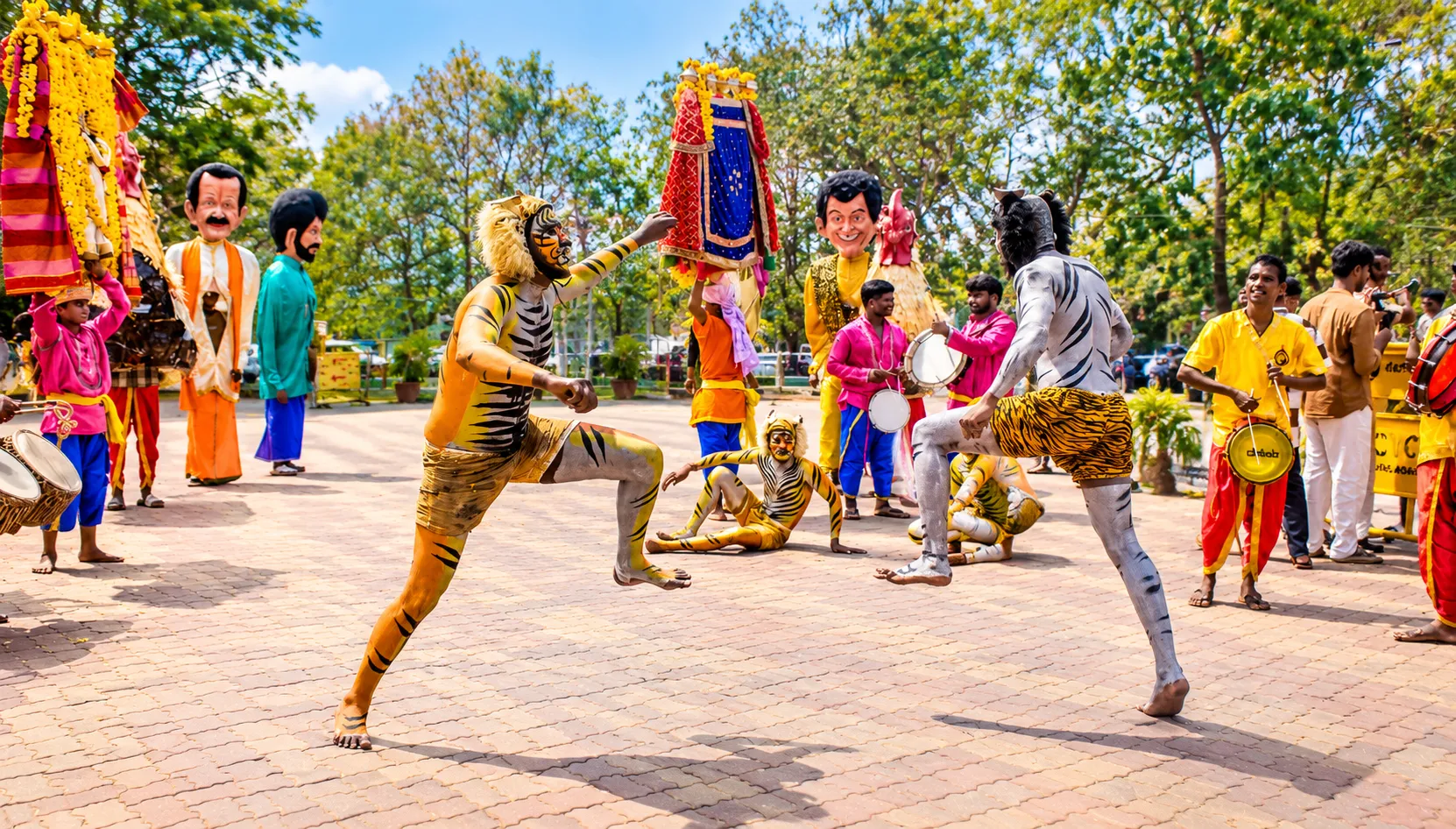
At the centre of the performance is a playful tiger-hunt theme. Some participants take on the role of tigers, while others appear as hunters. The movements are exaggerated and often humorous. Performers crouch, sway, shake their painted bellies and mimic the movements of prowling animals as percussion groups keep the procession moving.
A folk tradition shaped by colour and rhythm
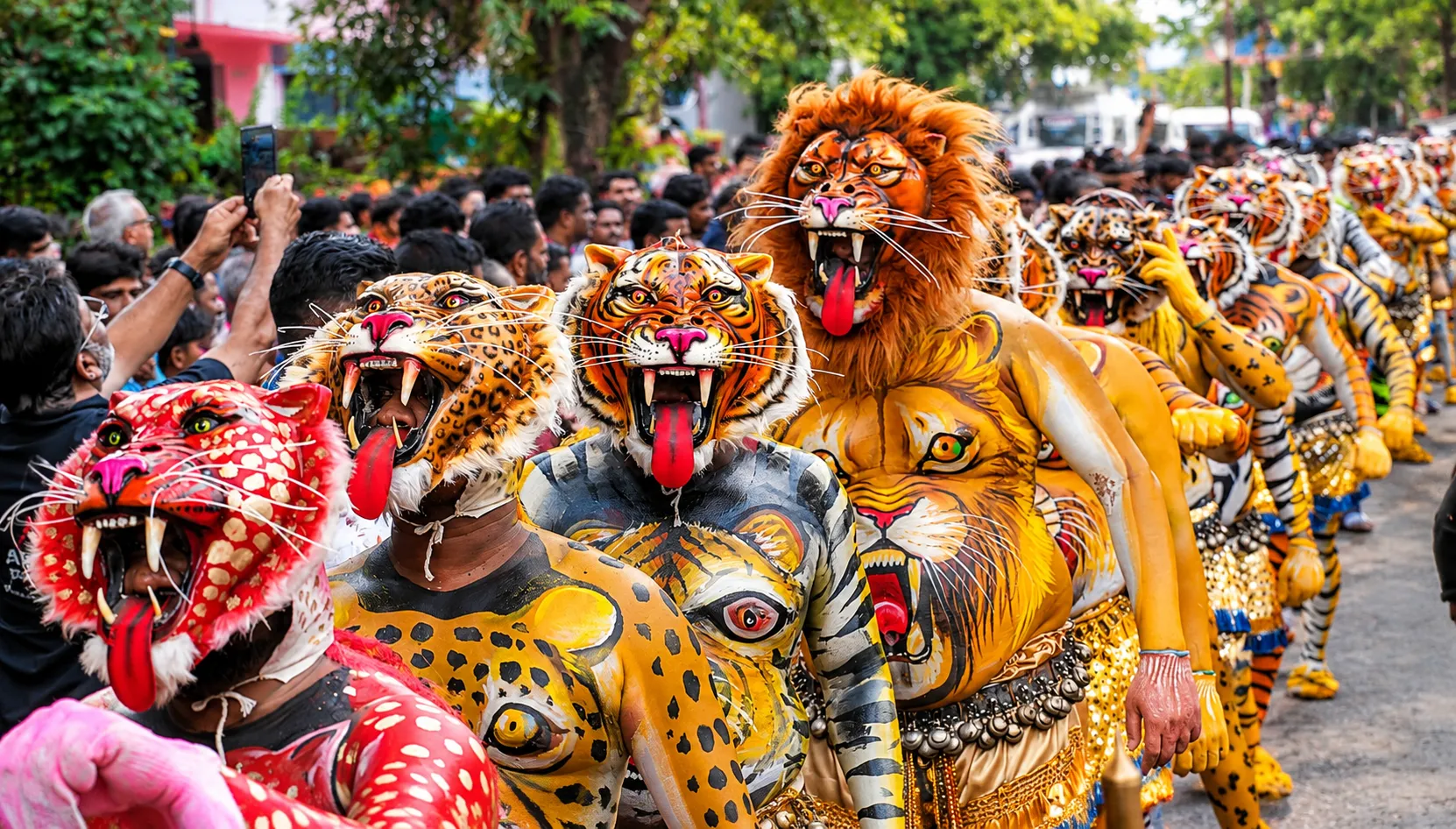
Pulikali is believed to have developed in Thrissur roughly two centuries ago. Over time, neighbourhood teams, locally known as sangams, helped turn it into a large public celebration. Each group brings its own performers, musicians, body-painting styles and visual ideas.
The painting process is as fascinating as the dance. Preparation can begin several hours before the procession. Bold tiger faces are painted across torsos, while stripes, spots and shadows are added over the body. Yellow, orange, black, red and white remain familiar choices, though contemporary teams often experiment with less conventional colours and designs.
A painted stomach gives the tiger face an unusual sense of movement. As the performer dances, the features seem to stretch, grin and growl. From a distance, the effect is comic and dramatic at once. Up close, the detail involved becomes clearer, particularly around the eyes, teeth and fur patterns. Traditional percussion supplies the pulse. Instruments associated with the event include the chenda, thakil and udukku. The beat is not background music. It shapes the movement of the procession, draws spectators towards the streets and gives the dancers their rhythm.
Why Thrissur is the place to see Pulikali
Smaller Pulikali performances may appear elsewhere during Onam, but Thrissur holds the strongest association with the art form. The procession traditionally converges around Swaraj Round and the open area surrounding Thekkinkadu Maidan, close to the heart of the city.
The setting matters. Thrissur’s circular centre allows groups to approach from different directions, creating waves of colour and drumming rather than one brief performance. Painted performers pass commercial streets, old buildings and tightly gathered spectators. It feels less like watching a scheduled show and more like being present while the city changes character for an afternoon.
Crowds can be substantial, and road diversions are common around major celebrations. Arriving early usually makes the experience less rushed. It also gives visitors an opportunity to notice the preparations, costumes and percussion groups before the busiest part of the procession begins.
Travelling from Kochi to Thrissur
For visitors arriving by air, Kochi is a convenient gateway to central Kerala. Cochin International Airport is approximately 58 kilometres from Thrissur, although road travel time depends heavily on traffic and festival-day diversions. Thrissur railway station is located close to the city centre and is another useful connection.
Travellers comparing Kochi flight tickets can review current dates and availability through the flight booking page. Those ready to book flight tickets to Kochi can also explore the available flights to Kochi. Flight availability, schedules and fares can change, especially around major festival periods.
To find affordable flight tickets, comparing dates slightly before and after the main celebration may be useful. Festival weekends tend to attract stronger demand, so travellers who book affordable flight tickets in advance generally have more flexibility when choosing their preferred itinerary.
What else to do around Thrissur
Pulikali may be the reason for the journey, but Thrissur rewards a little extra time.
Thekkinkadu Maidan forms the green centre of the city, with the Vadakkunnathan Temple occupying a prominent position within it. The temple’s architecture and surrounding grounds offer a quieter contrast to the Pulikali crowds, though entry practices and photography rules should always be respected.
The State Museum and Zoo complex provides an easy cultural stop for visitors interested in regional history and natural heritage. Sakthan Thampuran Palace, also known as the Shakthan Thampuran Palace, presents another link to the area’s royal past. Opening arrangements can vary during public holidays and festivals.
A longer stay can include a trip to Athirappilly Falls. The landscape is particularly lush around the monsoon and post-monsoon period, but paths may be slippery and water flow can be powerful. Closer to the coast, the backwaters and beaches around the wider Kochi region offer a slower final chapter after Thrissur’s drums and crowds.
Food is part of the experience too. During Onam, a traditional sadya served on a banana leaf is the obvious meal to seek out. Thrissur is also known for snacks such as banana chips, achappam and unniyappam. Festival-day restaurants can be busy, so an early lunch is often more relaxed than waiting until the procession is underway.
Pulikali stays in the memory because it is more than an attractive performance. It relies on patient preparation, neighbourhood participation, percussion and a considerable amount of physical effort. Standing near Swaraj Round as painted tigers emerge through the crowd, it becomes difficult to separate the art from the city hosting it. That is precisely what makes the tradition feel so alive.