Tarnetar Fair: A Vibrant Celebration of Gujarat’s Culture
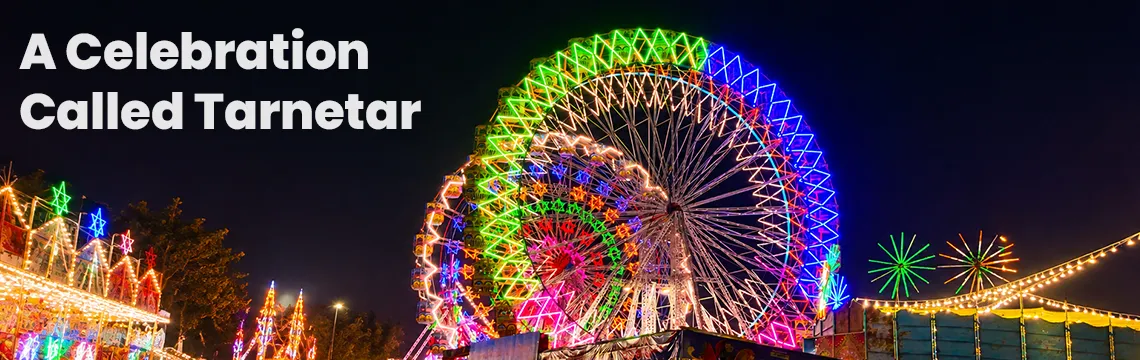
There are fairs that entertain for an afternoon, and then there are gatherings that seem to carry an entire region’s memory. The Tarnetar Fair belongs to the latter. Held in Tarnetar village, near Thangadh in Gujarat’s Surendranagar district, this annual celebration brings together folk music, elaborate costumes, traditional crafts, religious observances and an unmistakable sense of community.
Among the many festivals in Gujarat, Tarnetar stands apart for its rural setting and the way traditions appear as part of everyday life rather than a staged presentation. Drums continue through the day, dancers form large circles, pilgrims visit the temple, and brilliantly decorated umbrellas move above the crowd. At first, the scene can feel almost too colourful to take in. Gradually, its details begin to emerge.
The story of Tarnetar Fair
The story of Tarnetar Fair is commonly associated with the Mahabharata and the swayamvara of Draupadi. According to the legend, Arjuna won Draupadi’s hand by completing a difficult archery challenge. The fair’s connection with this story has helped shape its long-standing reputation as a place where young people from local communities could meet prospective partners.
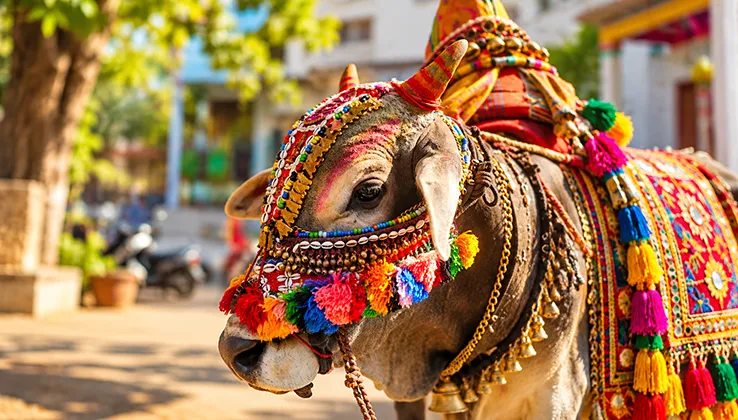
That tradition is often represented through the Tarnetar chhatri, or decorated umbrella. Historically, unmarried men carried carefully embellished umbrellas as symbols of skill, identity and readiness for marriage. Each umbrella could take considerable effort to prepare, with mirror work, embroidery, beads, tassels and colourful fabric arranged into elaborate patterns.
Today, the matchmaking association remains part of Tarnetar’s cultural narrative, though visitors encounter a much wider celebration. The fair is also a meeting place for communities from across the region, a market for craftspeople and a devotional gathering centred on the Trinetreshwar Mahadev Temple.
The event usually takes place during the Hindu month of Bhadarva, which commonly falls in August or September. Exact dates follow the traditional calendar and may vary each year.
Trinetreshwar Mahadev Temple and the fair’s spiritual side
The Trinetreshwar Mahadev Temple gives the celebration its spiritual centre. Dedicated to Lord Shiva, the temple attracts pilgrims who come to offer prayers and participate in customary observances during the fair.
Mornings around the temple can have a noticeably different rhythm from the busier fairground. Devotional songs, temple bells and prayer gatherings create quieter moments before the crowds build. Bhajan mandalis, or devotional singing groups, may perform with traditional instruments, adding another layer to the fair’s music.
This blend of worship and celebration is one reason Tarnetar cannot be understood simply as a village carnival. Religious devotion, social customs, artistic expression and entertainment occupy the same landscape, often only a few steps apart.
Watch Gujarati folk dances unfold
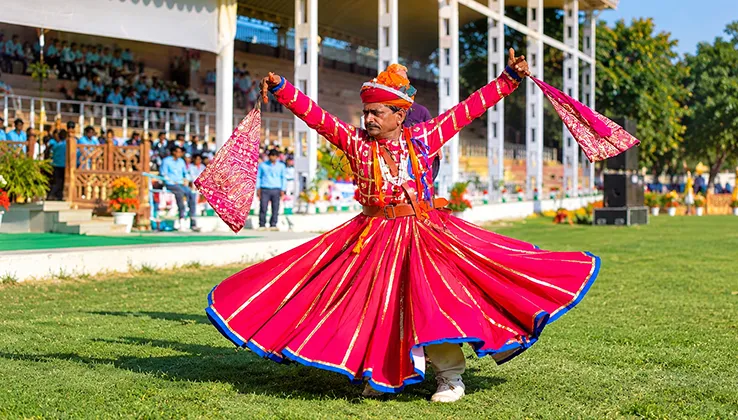
The Gujarati folk dances are among the fair’s most compelling experiences. Raas is especially prominent, with dancers moving rhythmically and striking sticks in coordinated patterns. Rasada may involve large circular formations accompanied by drums and the jodia pava, a traditional double flute.
Visitors may also encounter hudo, an energetic folk form associated with pastoral communities, and rahado, a circular dance traditionally performed by women from the surrounding region. These are not always presented as neatly timed stage shows. A musical sequence may begin in one corner of the grounds, attract more participants and slowly develop into a much larger performance.
Standing slightly away from the centre often gives a better view. From there, the repeating shapes, quick footwork and relationship between the drumbeats and dancers become easier to appreciate.
Browse handicrafts and traditional clothing
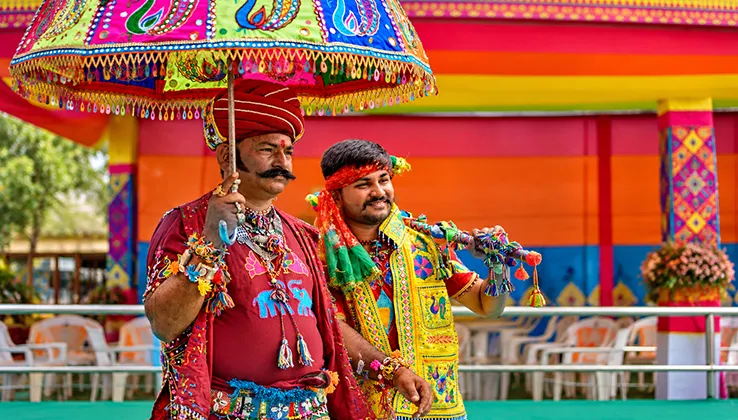
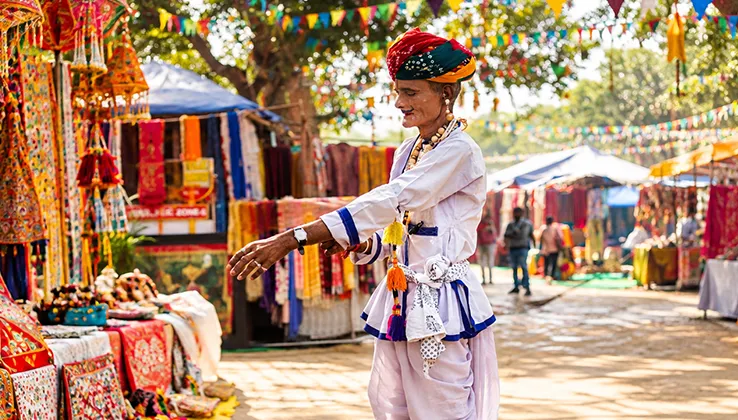
The market area rewards unhurried exploration. Stalls may display embroidered clothing, mirror-work textiles, jewellery, decorative objects, religious items and household crafts. Some pieces are made in styles associated with communities from Surendranagar and the wider Saurashtra region.
Look beyond the most immediately colourful objects. The stitching on a garment, the edging of a textile or the construction of a small ornament can reveal hours of patient work. Conversations with sellers may also offer a clearer understanding of how an item is made and used.
The fair can support local makers directly, although prices, materials and workmanship naturally vary from stall to stall. Carrying some cash is useful because digital payment connectivity may be inconsistent when the grounds become crowded.
What more to see and experience at Tarnetar Fair
Look closely at the decorated umbrellas
Tarnetar’s colourful chhatris feature mirrors, embroidery, beads and tassels. Some include striking bird or peacock designs. Since the umbrellas belong to participants, ask permission before taking close-up photographs.
Follow the music
Let the sound of drums, flutes and devotional songs guide you towards folk dances and craft displays. With rides, food stalls and lively crowds, comfortable footwear is essential on dusty or muddy grounds.
Sample the fairground food
Pause to enjoy freshly prepared Gujarati snacks and sweets from busy stalls. Carry bottled water and a light snack, especially during the humid monsoon season.
Reaching Tarnetar via Ahmedabad
Tarnetar village is approximately 8 km from Thangadh. Ahmedabad is a practical air gateway for travellers arriving from other parts of India, followed by an onward road or rail journey towards Thangadh and Tarnetar.
Travellers comparing Ahmedabad flight tickets will usually find that fares vary by departure city, travel dates, demand and how close the booking is to the journey. Anyone hoping to book flight tickets to Ahmedabad around the fair may find it useful to compare nearby dates rather than looking at only one travel day.
There is no permanently fixed definition of affordable flight tickets, particularly around festivals and long weekends. A fare that appears reasonable one week may change as seats are booked. Looking at both one-way and return options, avoiding peak departure hours where practical, and keeping travel dates flexible can help.
Visitors can search current flight availability and https://www.akasaair.com/flight-booking based on their preferred travel dates. Travellers beginning in Mumbai can also explore Mumbai to Ahmedabad flight options. Those seeking to book affordable flight tickets should compare the total fare and inclusions rather than focusing only on the first displayed amount.
After booking, itinerary details and available changes can be accessed through Manage Booking. Flight schedules and services can change, so the confirmed itinerary remains the most useful reference closer to departure.